
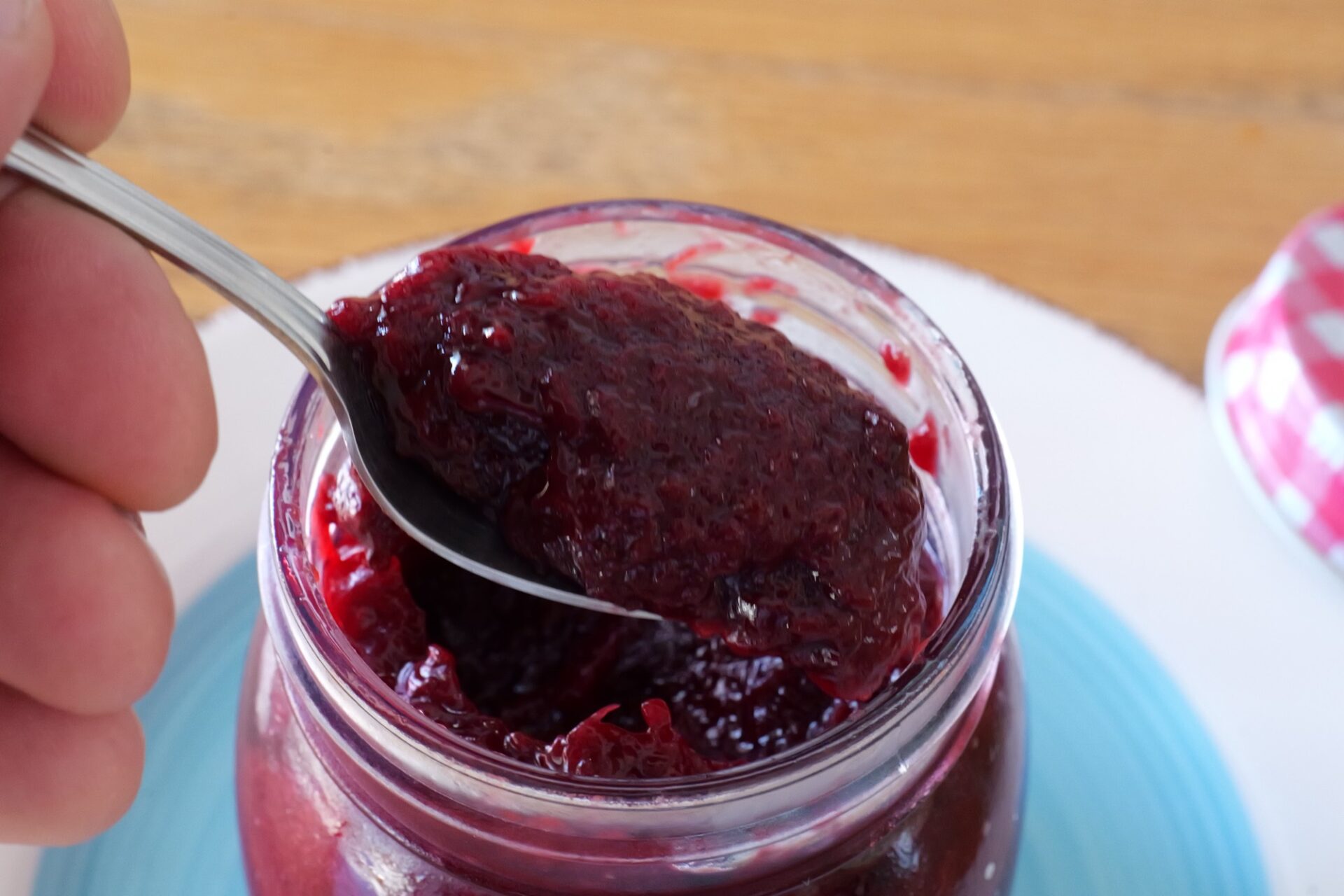
My first taste of Powidl came inside my mom’s Germknödel, steamed dough with a dark plum heart, bathed in melted butter and dusted with ground poppy seeds and powdered sugar. And here is the thing: as a kid I refused anything with fruit in it. Powidl was the exception. Creamy, deep, and nothing like any other jam on our table, it was simply something different.
Here in Cyprus I cannot buy Powidl for love or money, so I did what every Austrian household did before supermarkets: I made it. It turns out the real thing wants almost nothing from you. Not even sugar.
What is Powidl?
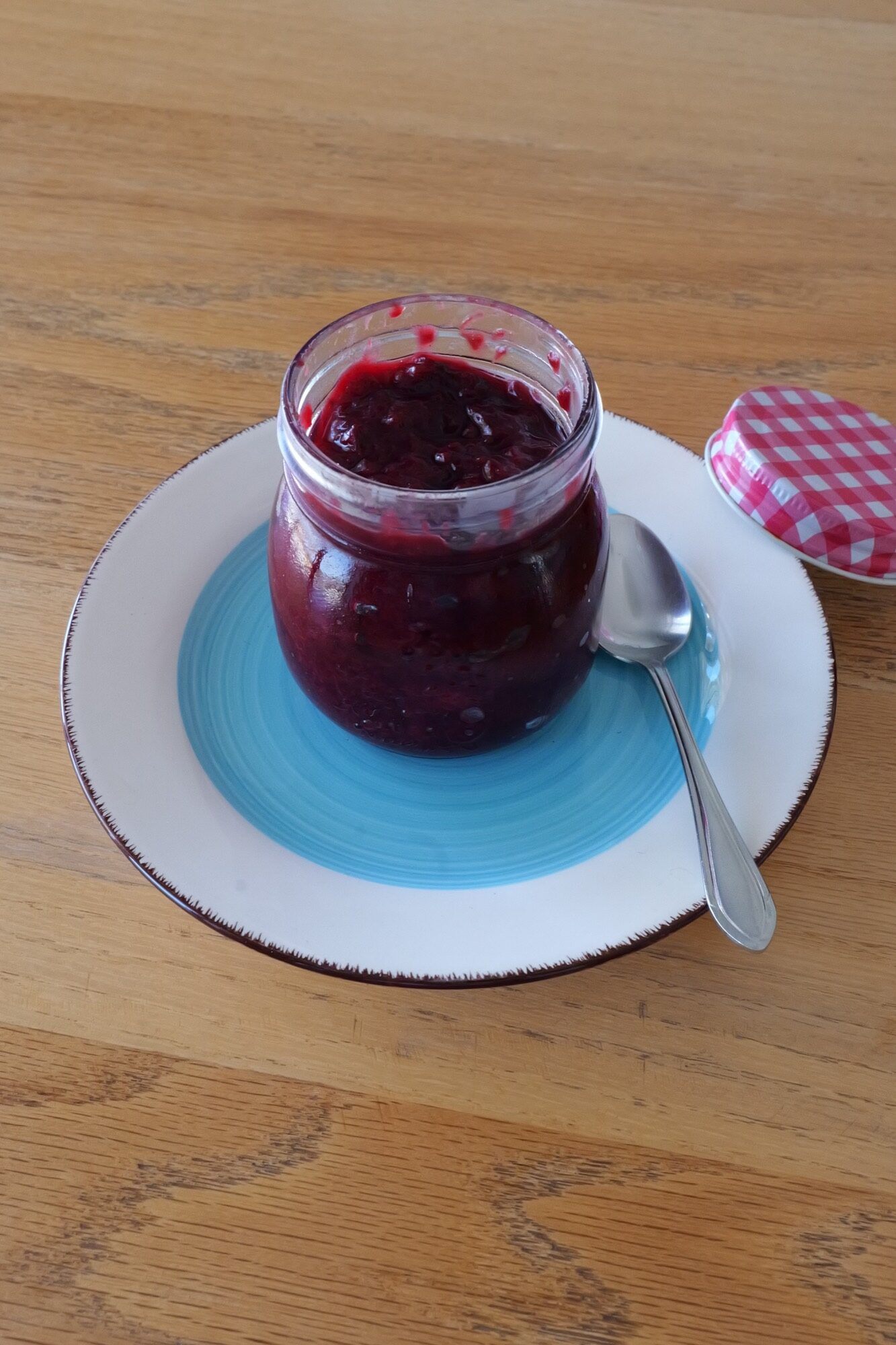
Powidl is Austria’s traditional plum butter: very ripe prune plums, slow-cooked for hours until they collapse into a dark, glossy, spreadably thick paste — with no added sugar, no pectin and no water. It is the classic filling for Germknödel, Buchteln and Powidltascherl, and just as good spread thickly on buttered bread.
Powidl, plum jam, Pflaumenmus, lekvar — what’s actually the difference?
English recipes use these words interchangeably, and they are not the same thing:
- Plum jam — fruit boiled briefly with plenty of sugar. Sweet, loose, spoonable.
- Pflaumenmus — the German cousin, usually made with added sugar and spices. Smoother and sweeter than Powidl.
- Powidl — plums only, reduced for hours until the fruit’s own sugar concentrates. Dense enough to hold its shape in a dumpling, with a deep, almost winey tartness.
- Lekvar — the Hungarian and Slovak word for the same family. Confusingly, most American “lekvar” recipes are made from dried prunes and sugar; traditional szilvalekvár is cooked from fresh plums, exactly like Powidl.
- Zwetschkenröster — not a spread at all: halved plums stewed briefly so they hold their shape, served warm beside Kaiserschmarrn. Twenty minutes, not five hours.
Why does real Powidl need no sugar?
Two reasons. First, prune plums are among the sweetest fruit you can buy when properly ripe — and Powidl was traditionally cooked in autumn from fruit at its peak, often fruit too ripe to sell. Second, hours of slow evaporation concentrate that sugar three- or four-fold. What starts as pleasant fruit ends as something intensely sweet-tart with no help at all. Chances are this is the original point of the recipe: in the centuries before cheap sugar, long cooking was the preservative.
My verdict from the Cyprus batch: it needed nothing. If yours tastes sharper than you like, a teaspoon of erythritol stirred in at the end sweetens it and keeps the jar genuinely sugar-free — which is the whole point of Powidl.
Which plums work? (And what to do outside Austria)
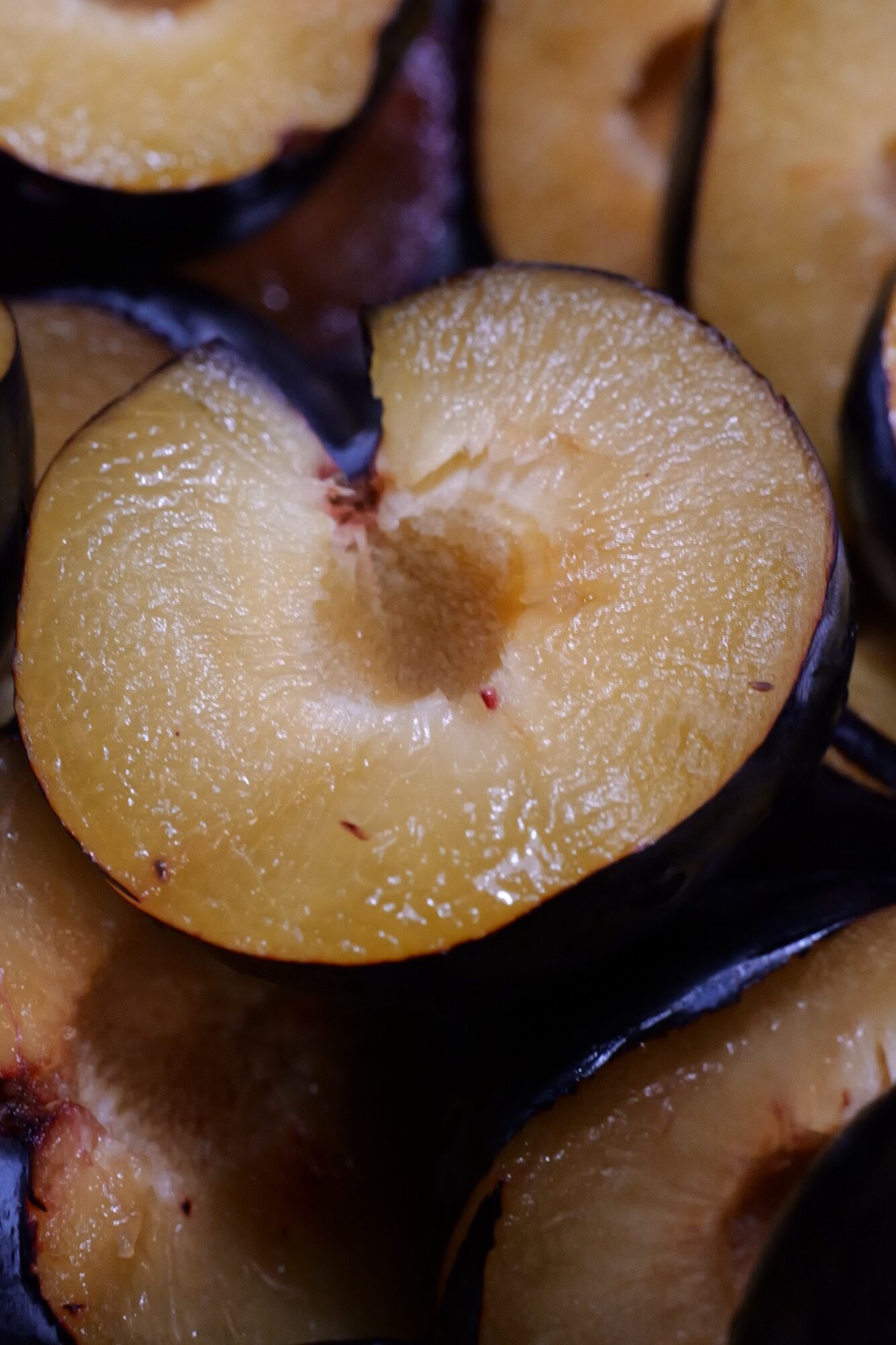
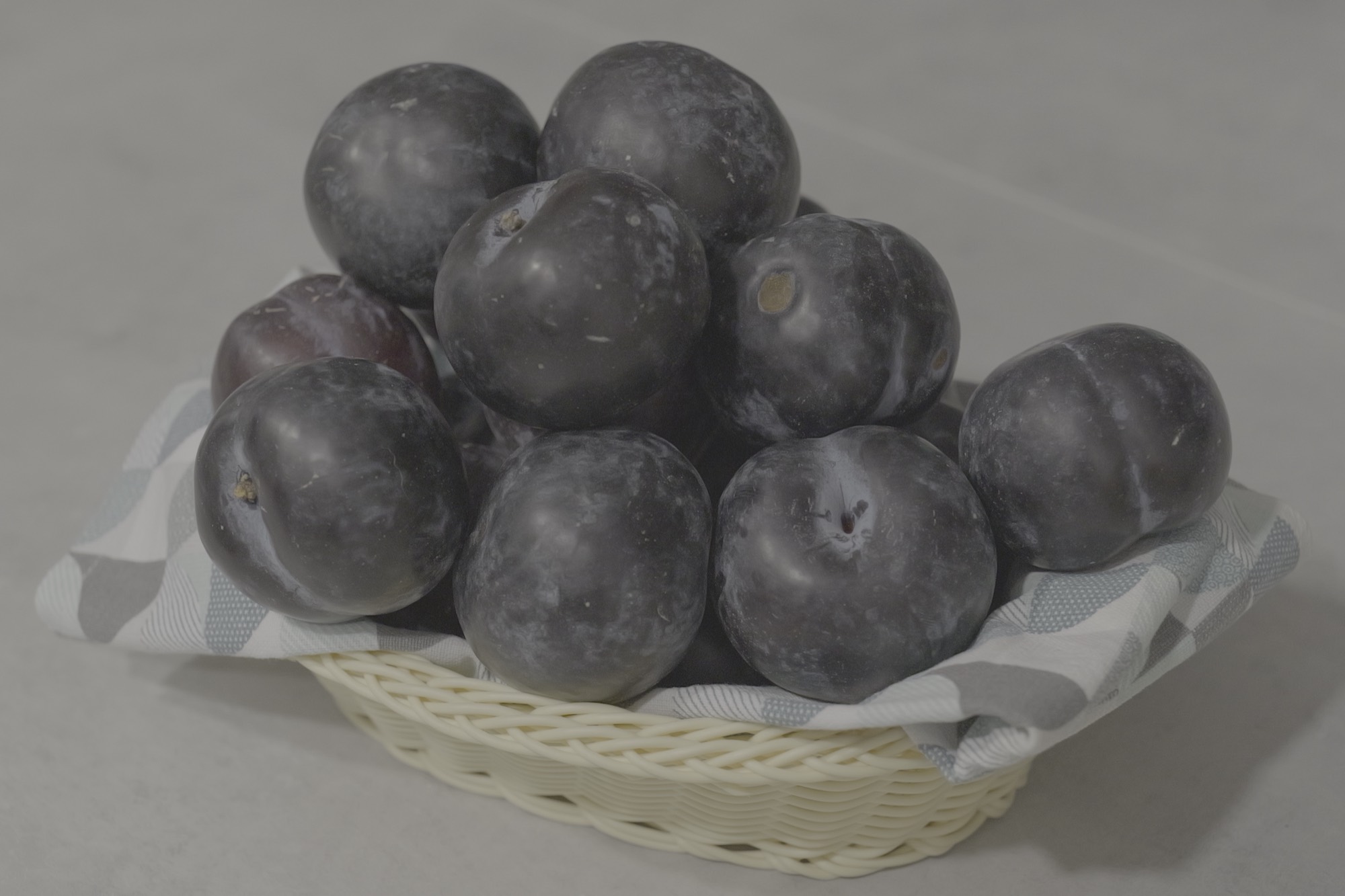
In Austria this is made with Zwetschgen — the small oval prune plums with dry, dense flesh that peak from late August into October. Freestone, low water, high sugar: built for the job. Outside Central Europe, look for anything sold as prune plums, Italian plums, Empress or Stanley plums. In the Mediterranean, late-season dark plums work well, pick the ripest, softest fruit at the market, the ones the vendor is about to discount. Watery round plums will still make Powidl; they just take an hour or two longer to reduce, and only they might need a spoonful of sugar to balance.
For the record, my batch was ordinary Cyprus supermarket plums — and here is a tip worth the whole post: Alphamega charged me €6 a kilo, and two days later Lidl had the same fruit for €1.60. Powidl is a two-kilo recipe, so shop around before you buy.
Why cook Powidl in the oven?
Every traditional recipe — and most of the internet — has you standing at the stove stirring for four hours so the bottom does not catch. The oven solves this completely: gentle all-around heat, evaporation from the whole surface, and nothing to do but stir once an hour. Wide and shallow beats deep and narrow, because surface area is what drives the reduction. This is the same principle as a laundry line versus a laundry pile.
“Es ist mir Powidl” — how a plum spread became Austrian slang
In Austria you will hear someone shrug and say “das ist mir Powidl” — literally “that’s Powidl to me,” meaning “I couldn’t care less.” The usual explanation: Powidl was so cheap, so ordinary and so permanently present in every pantry that it became the measure of things not worth getting excited about. The spread itself deserves better, but the idiom is a nice reminder of how central it once was — every farmhouse cooked a year’s supply each autumn.
What do you eat Powidl with?
This jar is the quiet workhorse of Austrian baking: it fills Germknödel (recipe coming to the blog soon — this Powidl is the reason I can finally make it in Cyprus), Buchteln, Powidltascherl and Palatschinken; it sweetens Pofesen, the gloriously un-diet Austrian answer to French toast; and on fresh bread with butter it needs no occasion at all.
Frequently Asked Questions
Why did my Powidl burn?
Almost always one of three things: the oven ran hotter than 150°C, the dish was deep and narrow instead of wide and shallow, or the hourly stir skipped the edges — that is where it always catches first. Scrape the corners every time you stir.
How long does Powidl keep?
Sealed hot into sterilised jars, months in a cool dark cupboard — the concentration that makes it thick is also what preserves it. Once opened, keep it in the fridge and use it within a few weeks.
Is Powidl the same as prune butter?
Close cousins. American prune butter (often labelled lekvar) is usually simmered from dried prunes with sugar — a shortcut that works year-round. Powidl is the long way: fresh plums and time. The flavour is brighter and more complex; the texture is the same dense, pastry-safe thickness.
Can I make it on the stovetop?
Yes — lowest heat, heavy pot, and stir every few minutes for three to four hours. It works, your grandmother did it, and your arm will remember it. The oven does the same job unattended.
Can I leave the plums out overnight in a hot climate?
I worried about exactly this in the Cyprus heat. The plums themselves are fine — they are about to be cooked for hours — but fruit flies will find an open dish of cut fruit within the hour. Cover it tightly with foil (that is what I did) or, in a very warm kitchen, let them macerate in the fridge instead. They release a little less juice cold, which costs you perhaps half an hour in the oven and nothing else.
Cooking from cups? My grams-to-cups converter for European recipes covers every ingredient below — plus the Austrian units (dag, EL, Würfel Germ) you will meet in my other recipes.
The Recipe
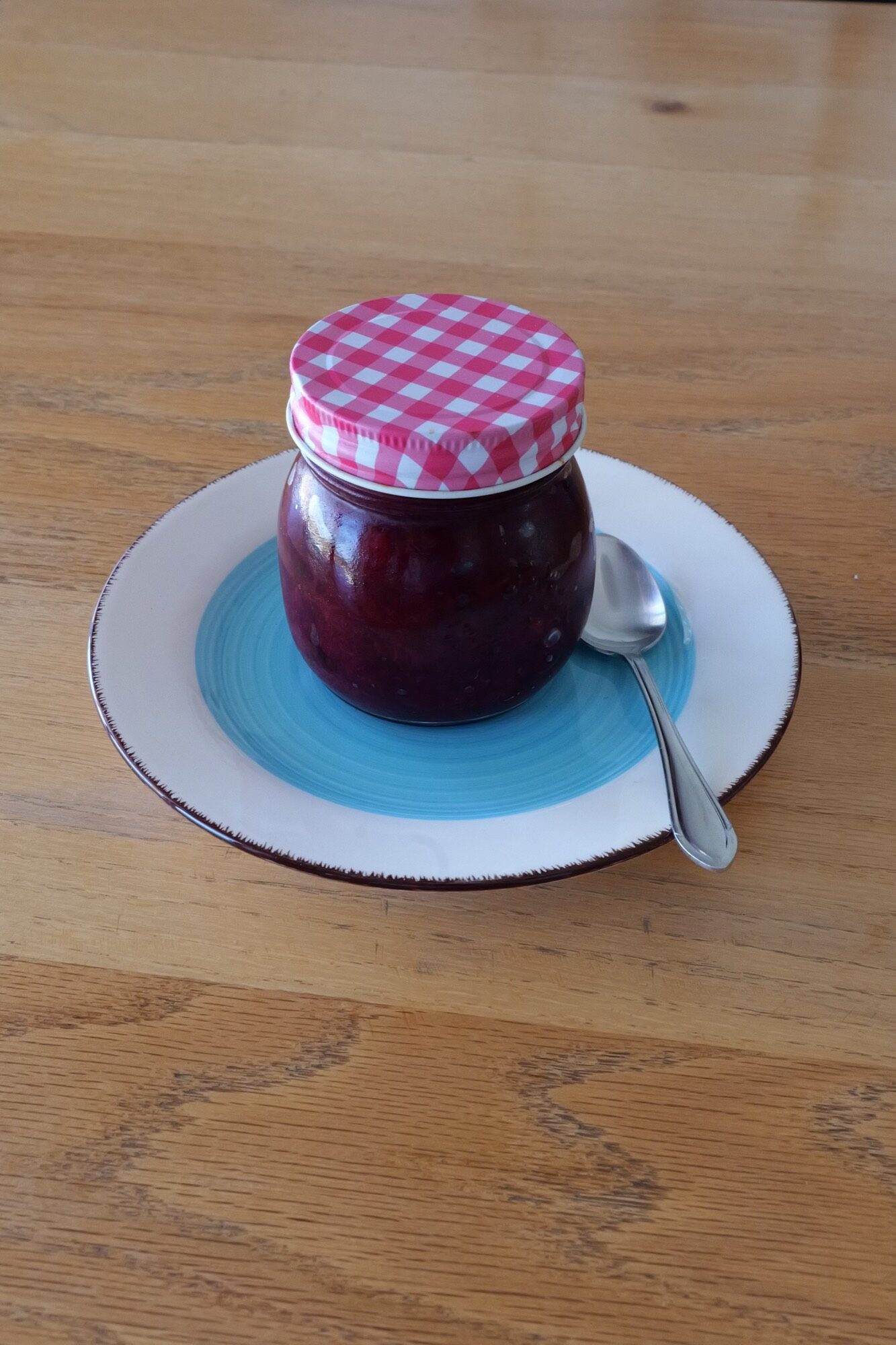
Powidl – Austrian Plum Butter with No Added Sugar
Ingredients
Powidl
- 2 kg Prune Plums (Zwetschgen) as ripe as you can find – wrinkly is good
- 1 Cinnamon Stick optional
- 2 Cloves optional
- 1 Tbsp Rum optional, stirred in at the end
Instructions
Prepare (the evening before)
- Halve and stone the plums. No peeling – the skins carry colour, pectin and most of the flavour.
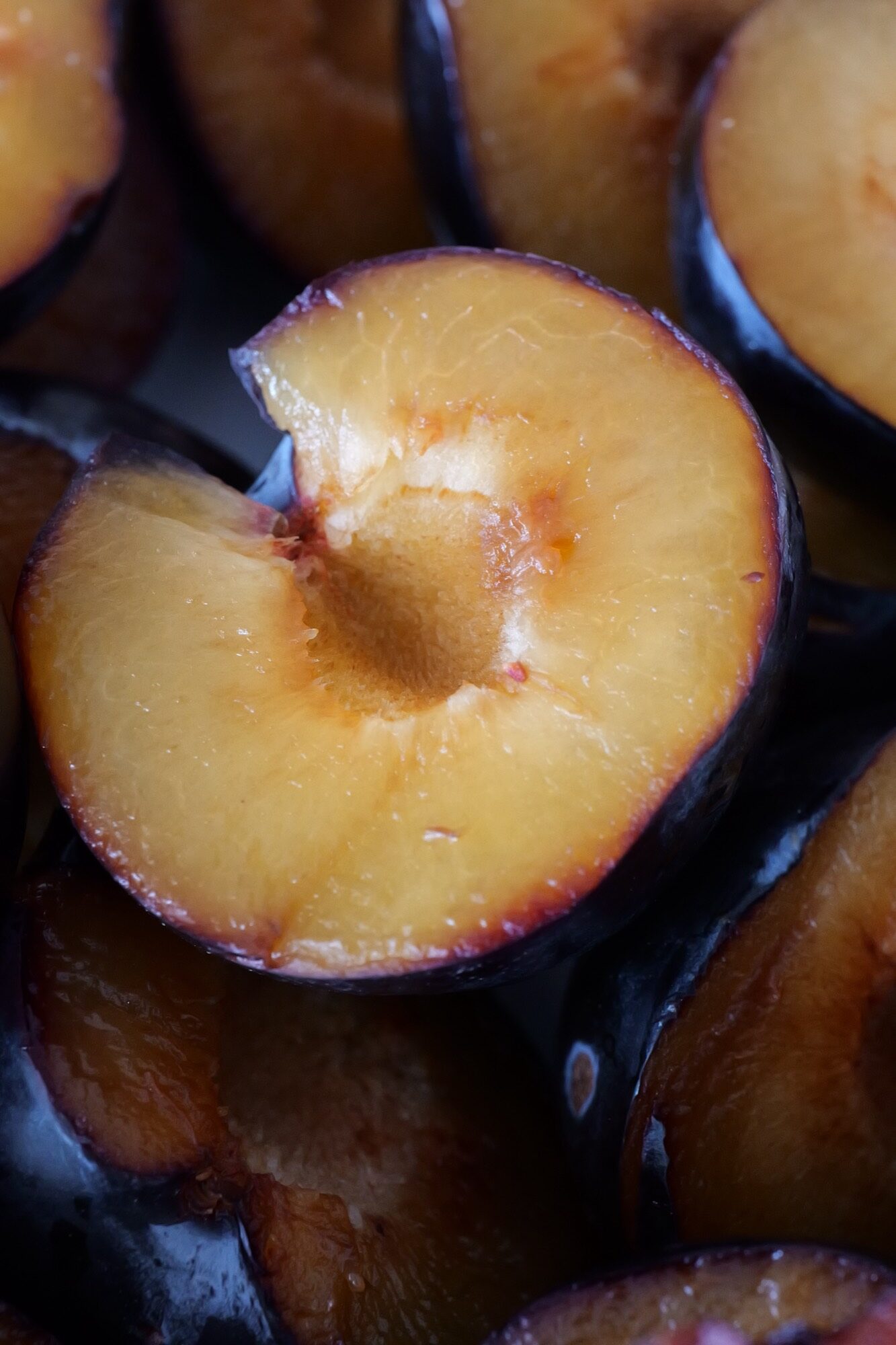
- Layer the plums in a wide, heavy roasting dish or Dutch oven, cover tightly with foil (fruit flies find cut fruit fast in a warm kitchen), and leave overnight at room temperature – or in the fridge if it is very hot. By morning they will be sitting in their own juice – this kick-starts the reduction and is why no water is ever needed.
Reduce
- Heat the oven to 150°C (130°C fan). Slide the dish in uncovered, with the spices tucked in if using. Stir once every hour, scraping the edges where it darkens first. No lid, no water, no sugar.
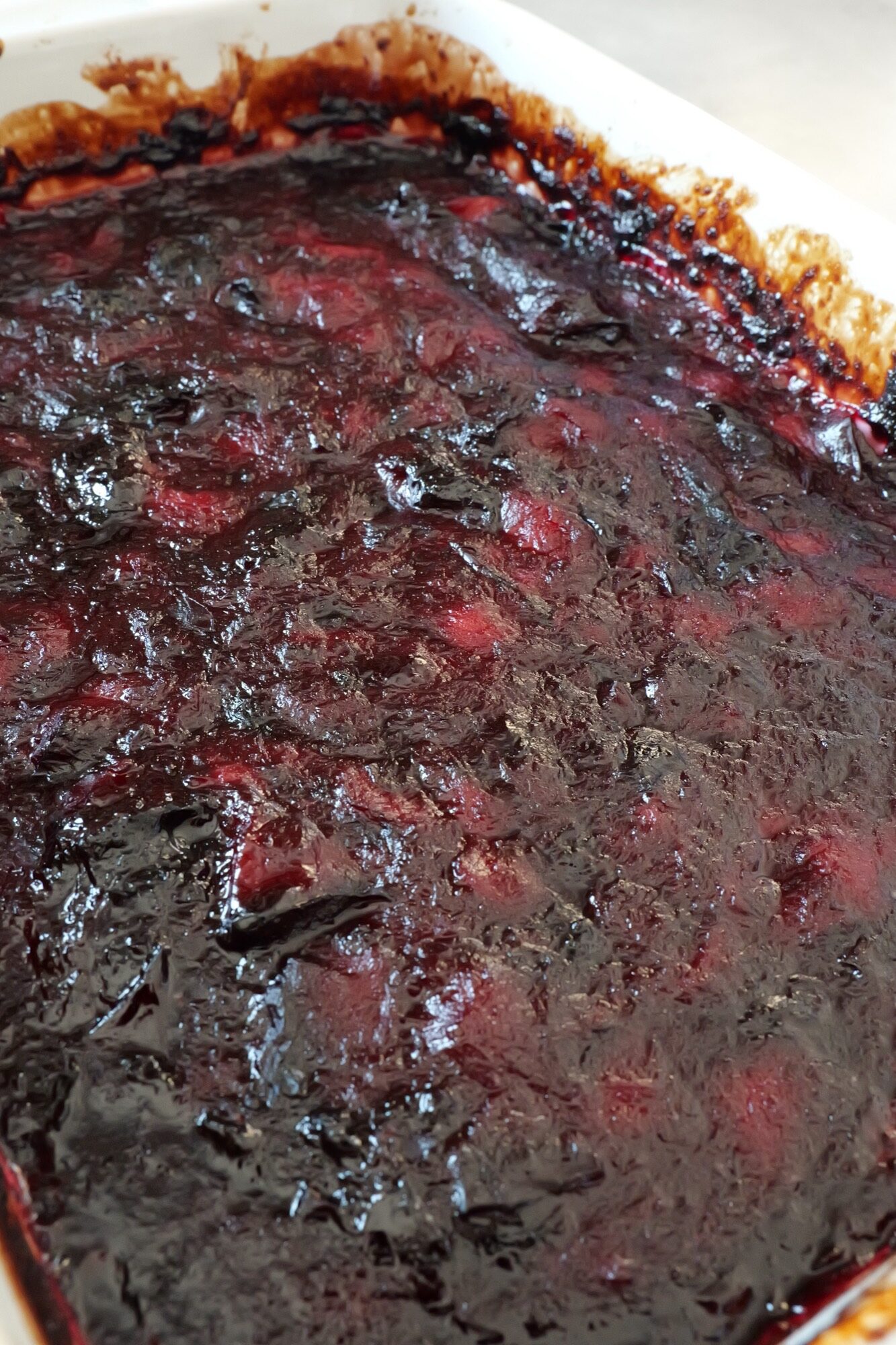
- Cook 3½–5 hours, depending on how juicy the plums are. The mass will collapse, darken from purple to deep mahogany, and thicken until a spoon dragged through leaves a trail that holds.
Finish
- The plate test: put a spoonful on a cold plate and tilt it. Real Powidl stands as a glossy mound with no ring of liquid running ahead of it. If juice runs, give it another 30–45 minutes.
- Fish out the spices. Leave it rustic, or blitz briefly with a stick blender for a smooth filling consistency (do this for Germknödel and pastry fillings). Stir in the rum if using.
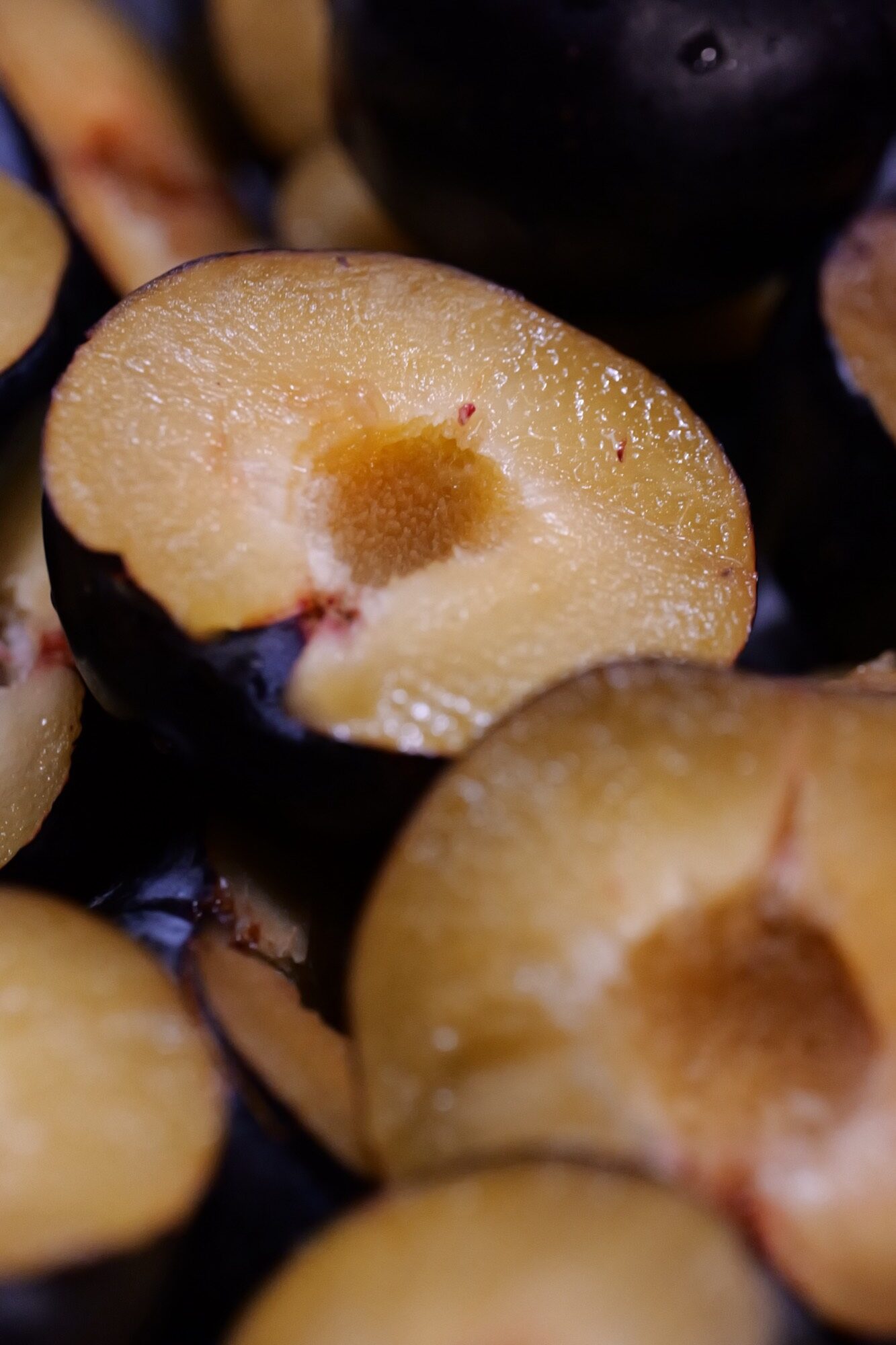
- Spoon boiling-hot into sterilised jars, seal, and turn upside down for 10 minutes. Unopened jars keep for months in a cool cupboard; opened, weeks in the fridge.
Notes
Did you make this recipe? You can rate it right on the recipe card above — just tap the stars, no comment needed. It takes two seconds and genuinely helps this small independent site. And if something didn’t work, tell me in the comments — I answer every single one.