
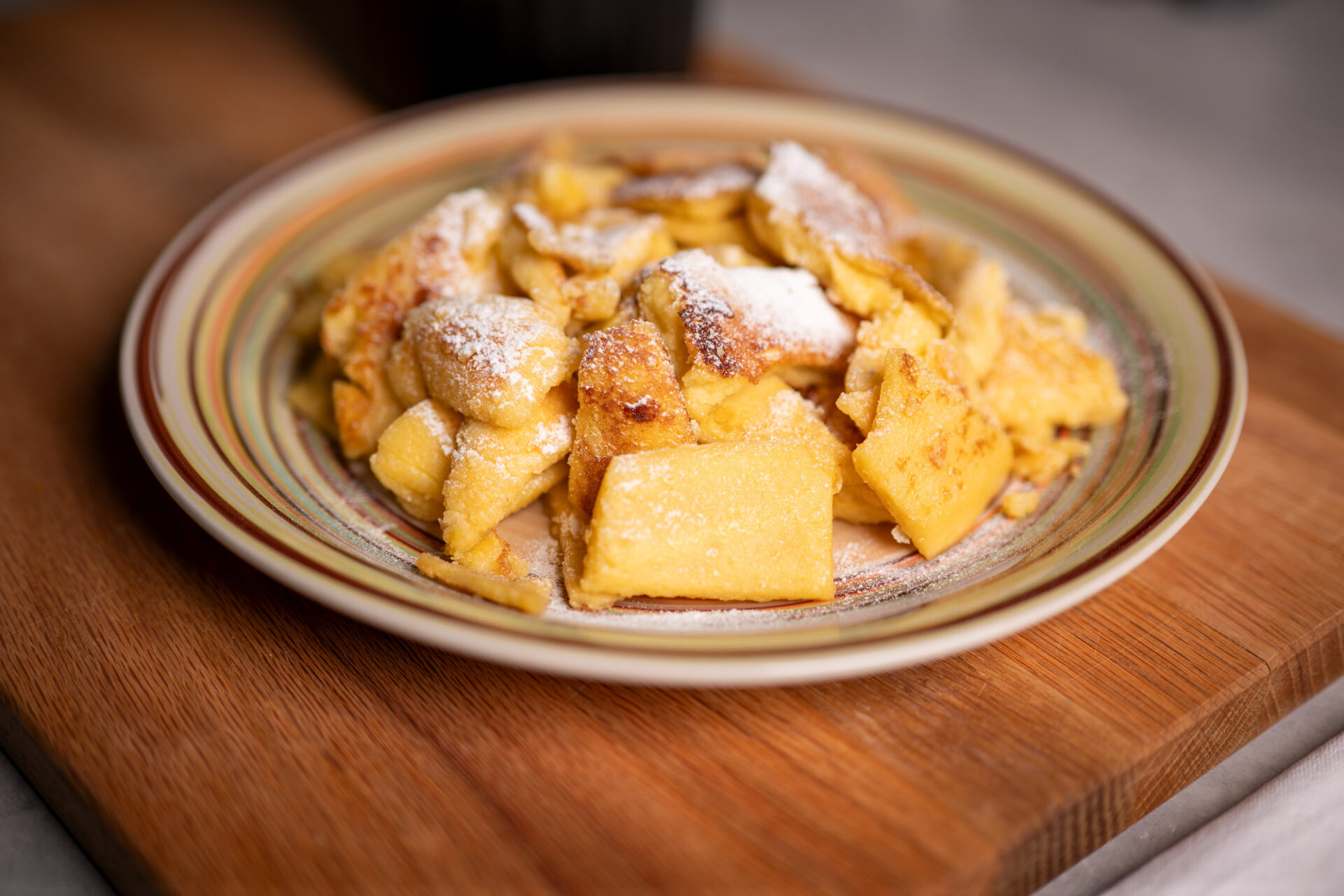
If you grew up in Austria like I did, Kaiserschmarrn isn’t just a recipe, it’s a memory.
Mine is a steaming plate of it at my grandma’s house. I always loved pancakes, and Grandma Rosa made the best. Then one day, she put a plate of Kaiserschmarrn in front of me.
“What’s this?” I asked.
“Kaiserschmarrn.”
“And what’s Kaiserschmarrn?”
She smiled and said, “It’s what happens when my pancakes don’t work out.”
I was pretty sure that wasn’t the official story. Hold that thought, though — because as I found out researching this post, Grandma Rosa was closer to the truth than most cookbooks.
To this day, Kaiserschmarrn is the dish I miss most when I’m away from Vienna and the one my friends always ask me to make when they visit. The good news: you don’t need to live in Vienna to make it. You need four eggs, a frying pan, and the confidence to tear a perfectly good pancake apart. Ready? Let’s get started!
What is Kaiserschmarrn?
Kaiserschmarrn (literally “the Emperor’s mishmash”) is a thick, soufflé-light pancake that is roughly torn in the pan, then caramelised in butter and sugar. It sits somewhere between a pancake, a soufflé and a dessert you eat straight out of the pan when nobody is watching. Schmarrn also means nonsense in Austria 🙂
The legend of the Emperor’s pancake
The story everyone tells stars Kaiser Franz Joseph I, who ruled Austria for 68 years and, if you believe the tales, had strong opinions about dessert. In the most popular version his kitchen botched a delicate crêpe for Empress Elisabeth, and the Kaiser rescued the situation by eating the torn-up result himself, declaring it delicious. There are other versions — a nervous farmer, a court chef’s flipping accident — and they are all charming.
Why Kaiserschmarrn probably wasn’t named after an emperor
Here’s the part no one tells you: Austria’s official register of traditional foods lists every one of those imperial stories as unverified legend. The likelier explanation is much humbler. In the dialect of the southern Alps, a Kaser is an alpine dairyman — and a “Kaserschmarren” was the herdsman’s scramble, torn pancake cooked over a hut fire. The word Schmarren itself shows up in print as far back as 1563, centuries before Franz Joseph, as simple food for herders and farm workers. Somewhere along the way, city kitchens polished the dish, and “Kaser” got promoted to “Kaiser.”
In other words: Kaiserschmarrn didn’t start in a palace. It started as what happens when honest pancakes don’t work out — which means Grandma Rosa’s explanation was, historically speaking, the correct one. I owe her an apology for doubting.
Hut style or Viennese style?
Ask two Austrians how to make Kaiserschmarrn and you’ll get three answers, but they sort into two honest schools. Hut style is how it’s still made on alpine huts: whole eggs beaten hard, no separating, lid on the pan, low heat — denser, eggier, built to refuel skiers. Viennese style is the refined version: egg whites whipped and folded in, an oven or grill finish, and — the real restaurant secret — the torn pieces get a second caramelisation: sprinkled with sugar and returned to fierce heat so every edge crisps, not just the ones touching the butter. Vienna’s famous kitchens even toss the pieces in cinnamon sugar for that final step, and the Hotel Sacher’s version sneaks lemon juice and rum into the batter.
My recipe below is Viennese school — whipped whites, rested batter, and the sugar-and-grill finish for those crunchy caramel edges. If you want the hut experience instead, skip the separating, beat everything together well, and cook it gently with the lid on. Nobody at 1,800 metres will judge you, and neither will I.
Ingredient notes
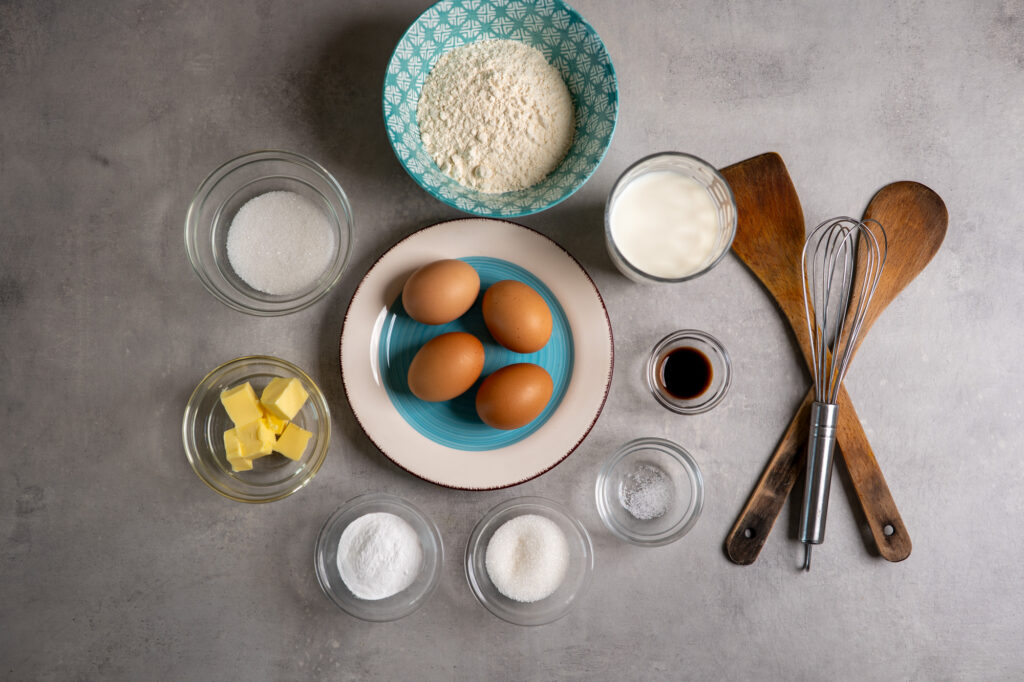
- Eggs — separated. The whipped whites are the whole secret; fold them in gently and don’t overmix. It gives it the fluffy texture.
- Flour — plain all-purpose or a 00 flour, 120 g. Kaiserschmarrn is more egg than flour.
- Milk — 250 ml, room temperature so the batter stays smooth. Use full fat for the best result but 1.5% works too.
- Rum raisins — optional but traditional. Soak 50 g raisins in 2 tablespoons of rum while the batter rests, then scatter them over the batter once it’s in the pan — that way they neither sink nor scorch. Leave them out for kids and nobody will complain twice. (I’m still a kid, so I don’t like them either.)
- Butter and sugar — for the pan and the caramel finish. Don’t be shy with either.
Tips for perfect Kaiserschmarrn
- Rest the batter 15 minutes before folding in the whites — it relaxes the flour and makes the Schmarrn noticeably lighter.
- Use a heavy oven-safe pan — you’ll start on the hob and finish under the grill.
- The pancake should still be slightly moist in the middle when you tear it; it finishes cooking in the caramel step.
- Tear with two forks, roughly. Neat pieces are wrong pieces.
- Serve immediately. Kaiserschmarrn waits for no one, it deflates like a soufflé.
What is Zwetschkenröster? (And why plum jam is the wrong substitute)
In Vienna, Kaiserschmarrn comes with Zwetschkenröster — and it is not plum jam, whatever the internet tells you. It’s halved prune plums stewed almost dry in their own juice with sugar, a cinnamon stick, a couple of cloves and a squeeze of lemon, done in about 20 minutes when the fruit is soft but still holding its shape. Barely sweet, a little sharp, and exactly what the caramelised pancake needs.
Quick Zwetschkenröster: halve and stone 500 g prune plums. Put them in a saucepan with 80 g sugar, a cinnamon stick, 2 cloves and the juice of half a lemon — no water. Lid on, low heat, 15–20 minutes, shaking now and then, until soft but intact. Fish out the spices. Done. (Looking for plums: in Europe prune plums peak August to October; my Australian readers will find blood plums and sugar plums at their best January to March — perfect timing, since that’s your ski season anyway.)
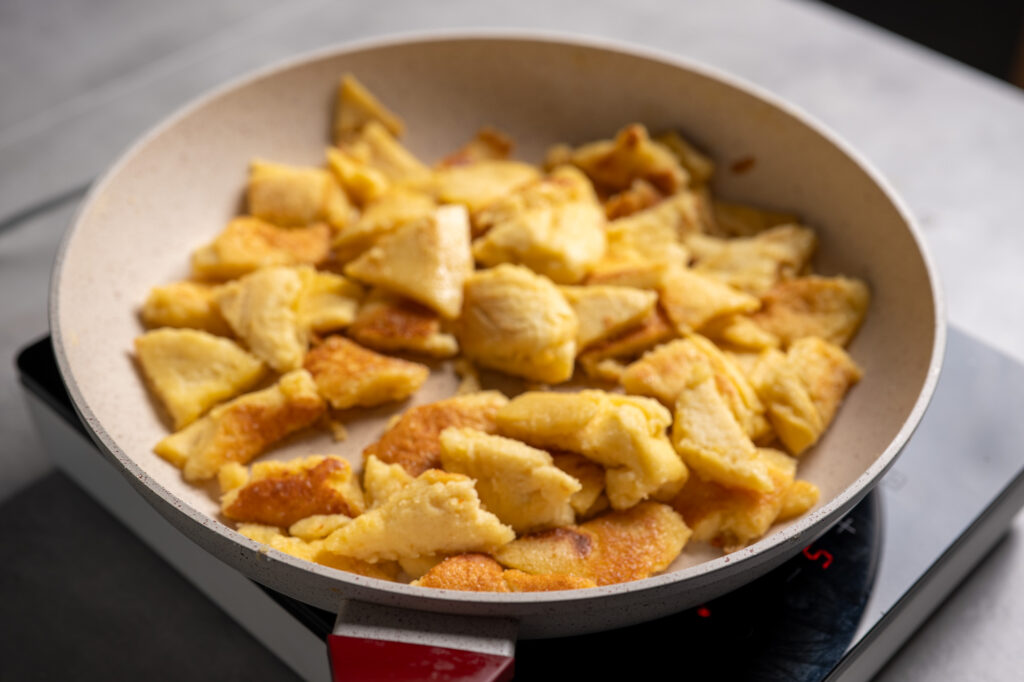
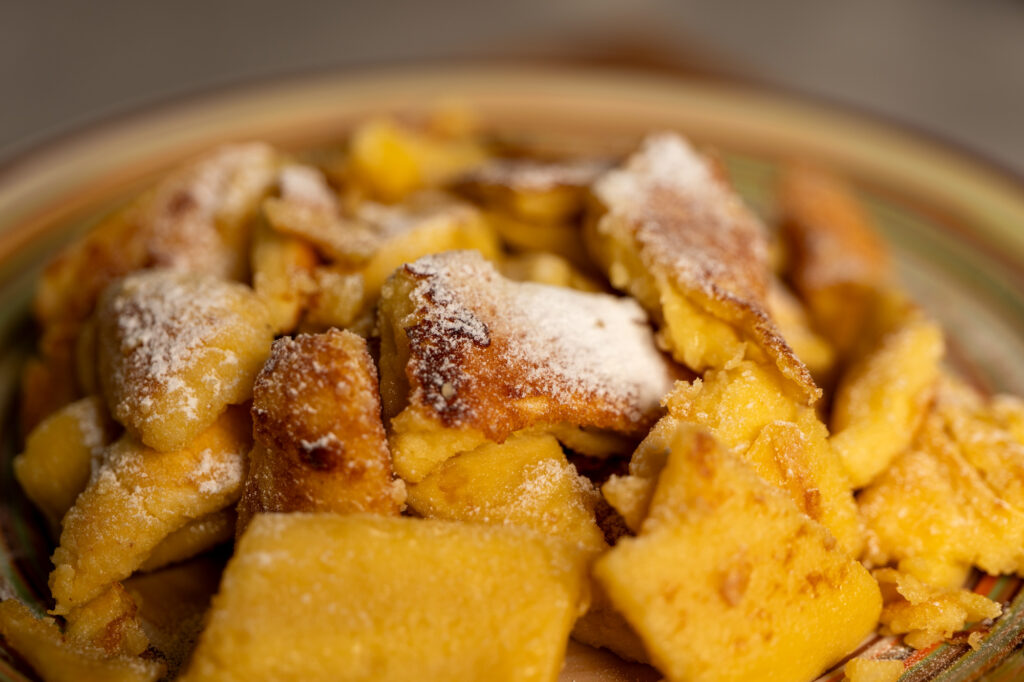
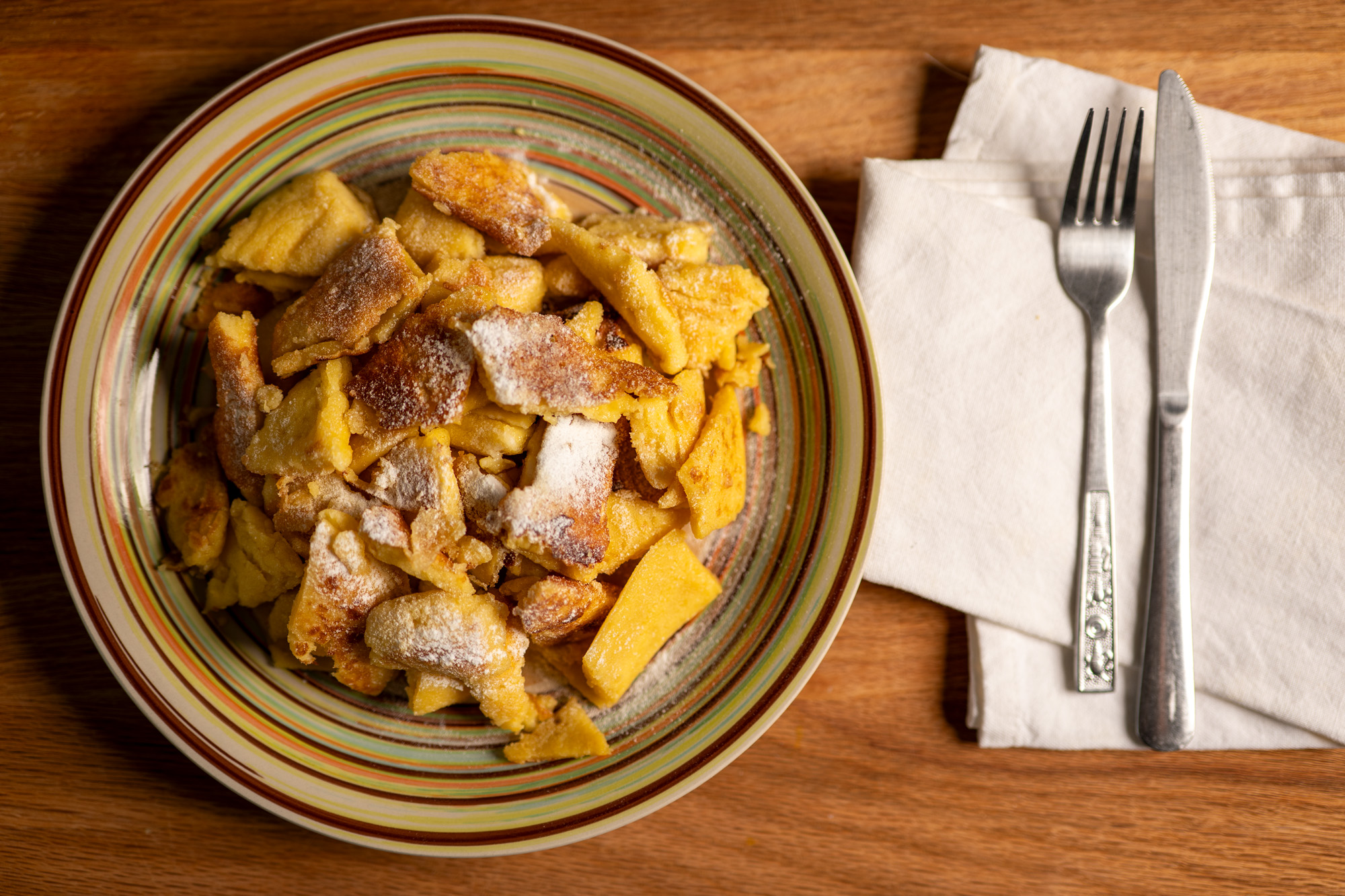
Apple sauce is the common substitute and completely acceptable. What Kaiserschmarrn does not need is syrup: the caramel and powdered sugar do the work. I see some videos with Nutella on it, please don’t 😀 Full confession: like the raisins, I skip the compote entirely — I’ve simply never liked it. My plate gets powdered sugar and nothing else, as every photo in this post quietly proves.
If it is the plum direction you love, though: my homemade Powidl — the no-added-sugar Austrian plum butter — shows what plums can do given nothing but time.
Frequently Asked Questions
Can I make Kaiserschmarrn without rum raisins?
Absolutely, they’re traditional but optional. Soak them in apple juice instead of rum, or leave them out entirely.— I’ve never been a raisin person — and nobody has ever sent a plate back.
Why did my Kaiserschmarrn turn out dense?
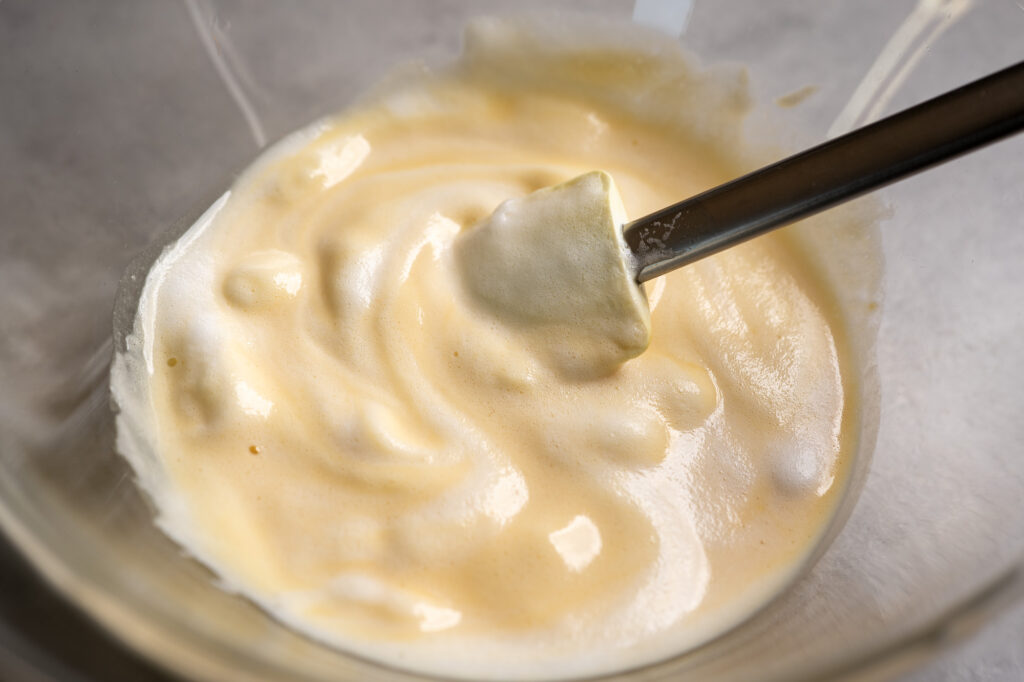
Almost always overmixed egg whites. Fold them in with a rubber or silicone spatula in three additions and stop while you can still see faint streaks. (Unless you were going for hut style, in which case: dense is the point.)
Is Kaiserschmarrn breakfast or dessert?
Yes. In Austria it’s eaten as a sweet main course, a dessert, and an after-ski meal. There are no rules, which is rather the point of a Schmarrn.
More Austrian classics to try
If Kaiserschmarrn is your kind of dish, stay in the mountains and try my Germknödel — the ski hut’s other great dessert, or bring the Viennese coffee house home with my Gugelhupf, Punschkrapfen and the showstopper Esterházy torte. And for the full Austrian breakfast table, bake a batch of Kaisersemmel rolls — the Emperor lends his name to those too, with equally shaky evidence.
Cooking from cups? My grams-to-cups converter for European recipes covers every ingredient below — plus the Austrian units (dag, EL, Würfel Germ) you will meet in my other recipes.
The Recipe
Kaiserschmarrn – The Emperor’s Fluffy Shredded Pancake
Equipment

Ingredients
Batter
- 4 Medium Eggs separated
- 120 Grams All-Purpose Flour
- 250 ml Milk room temperature
- 30 Grams Crystal Sugar
- 1 tsp Vanilla Extract
- 1 Pinch Salt
Extras
- 50 Grams Raisins soaked in 2 tbsp rum, optional
- 40 Grams Unsalted Butter for the pan
- 2 Tbsp Crystal Sugar for caramelising
- 2 Tbsp Powder Sugar to serve
Instructions
Batter
- Whisk the egg yolks with milk, vanilla, sugar and salt, then whisk in the flour until just smooth. Rest the batter for 15 minutes.
- Beat the egg whites with a pinch of salt to soft peaks. Fold into the rested batter in three additions — stop while a few streaks remain.
Cook
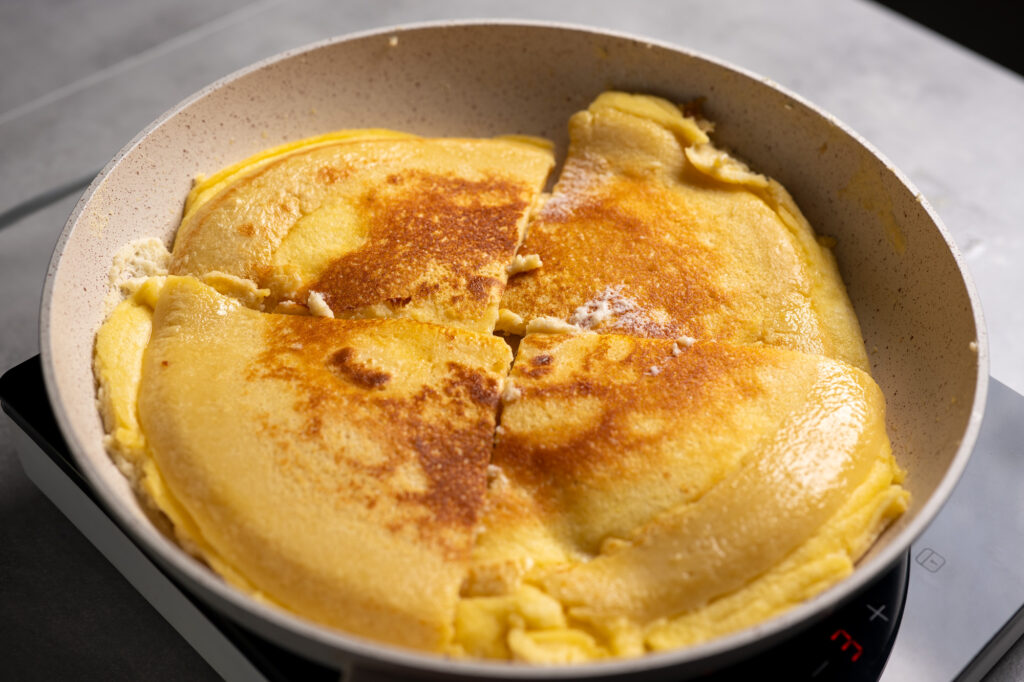
- Melt half the butter in a 26–28 cm oven-safe pan over medium heat. Pour in the batter, scatter over the drained rum raisins, cover and cook 6–8 minutes until the underside is golden and the top is just set at the edges.
- Quarter the pancake in the pan, flip each quarter, add the remaining butter and cook 3–4 minutes more until golden.
Caramelise
- Tear the pancake into rough bite-sized pieces with two forks. Sprinkle with the sugar and either toss over high heat for 2 minutes or slide under a hot grill for 60–90 seconds — the pieces are done when the edges are crisp and caramel-brown.
Serve
- Dust generously with powdered sugar and serve straight from the pan with plum compote or apple sauce.
Notes
Nutrition
Did you make this recipe? You can rate it right on the recipe card above — just tap the stars, no comment needed. It takes two seconds and genuinely helps this small independent site. And if something didn’t work, tell me in the comments — I answer every single one.